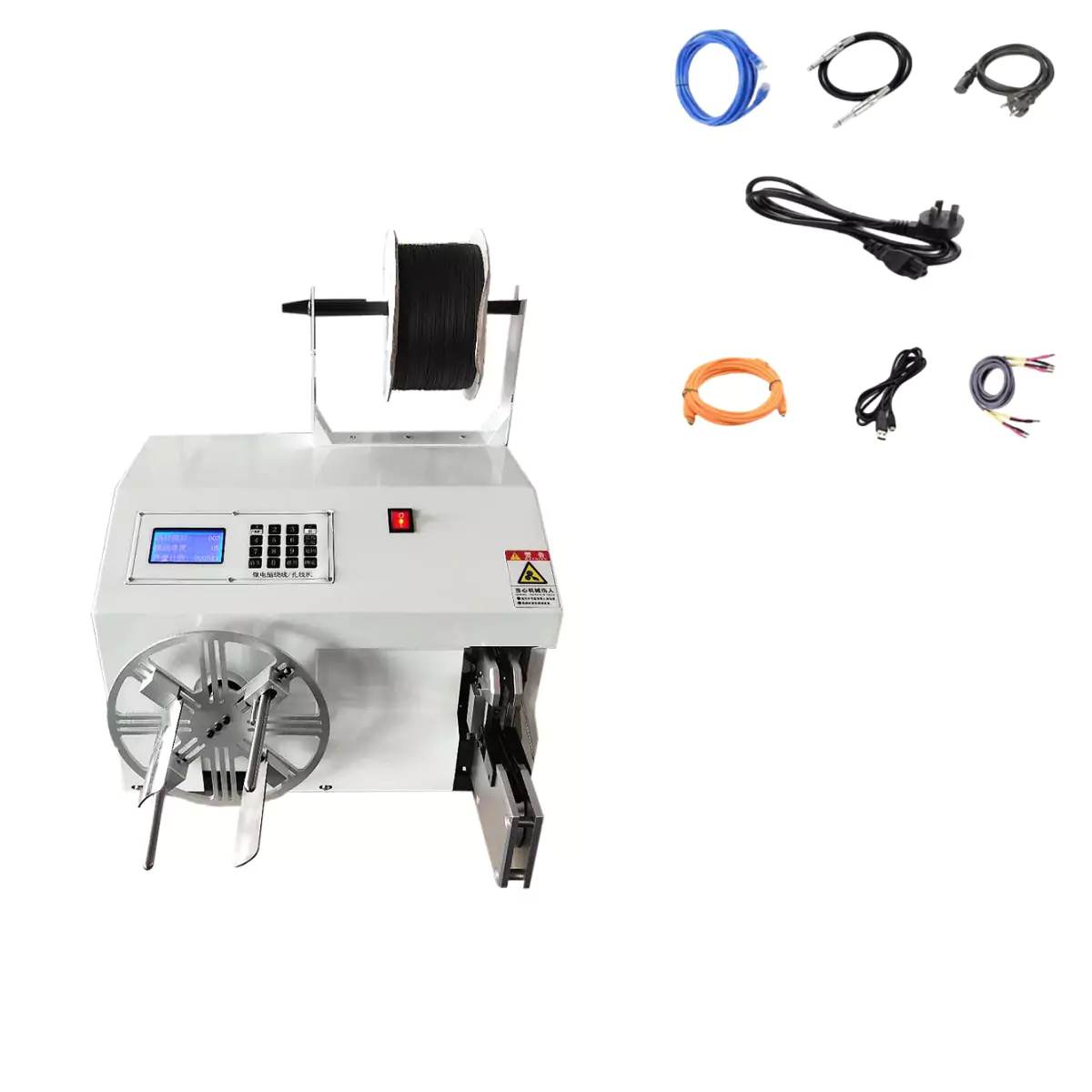
Cable Coiling Twist Tie Machine: Common Fault Causes and Adjustment Methods for Unstable Twisting Length
Common Fault Causes of Cable Coiling Twist Tie Machines
During operation, cable coiling twist tie machines may encounter various faults that affect performance. Key causes include:
Wear of Mechanical Components
Bearings, gears, and other mechanical parts may wear over time, leading to reduced transmission efficiency or precision.
Electrical Component Failures
Issues such as poor power contact or motor malfunctions can cause startup failures or unstable operation.
Sensor Malfunction
Sensors detecting cable position, speed, or tension may fail, resulting in inaccurate motion control.
Software Program Errors
Bugs or compatibility issues in the control software may disrupt preset operation sequences.
II. Adjustment Methods for Unstable Twisting Length
To resolve unstable twisting length, follow these steps:
Inspect Mechanical Components
Check the coiling wheels, twisting blades, and other parts for damage or improper installation. Replace worn components promptly.
Adjust Cable Tension
Ensure cable tension stays within the optimal range (refer to the manual or consult technical support). Excessive or insufficient tension causes length instability.
Calibrate Sensors
Recalibrate position/speed sensors to ensure accurate detection. Replace malfunctioning sensors immediately.
Update Software
Install the latest software version or contact the manufacturer to resolve programming conflicts.
Optimize Twisting Time Parameters
Fine-tune the twisting duration in the control system to stabilize length. Increase or decrease time incrementally based on test results.
Conclusion
Understanding common faults and adjustment methods is critical for maintaining cable coiling twist tie machines. Regular inspections and timely troubleshooting ensure stable operation and maximize productivity.
Find expert cable coiling twist tie machine technical resources on our specialized page.