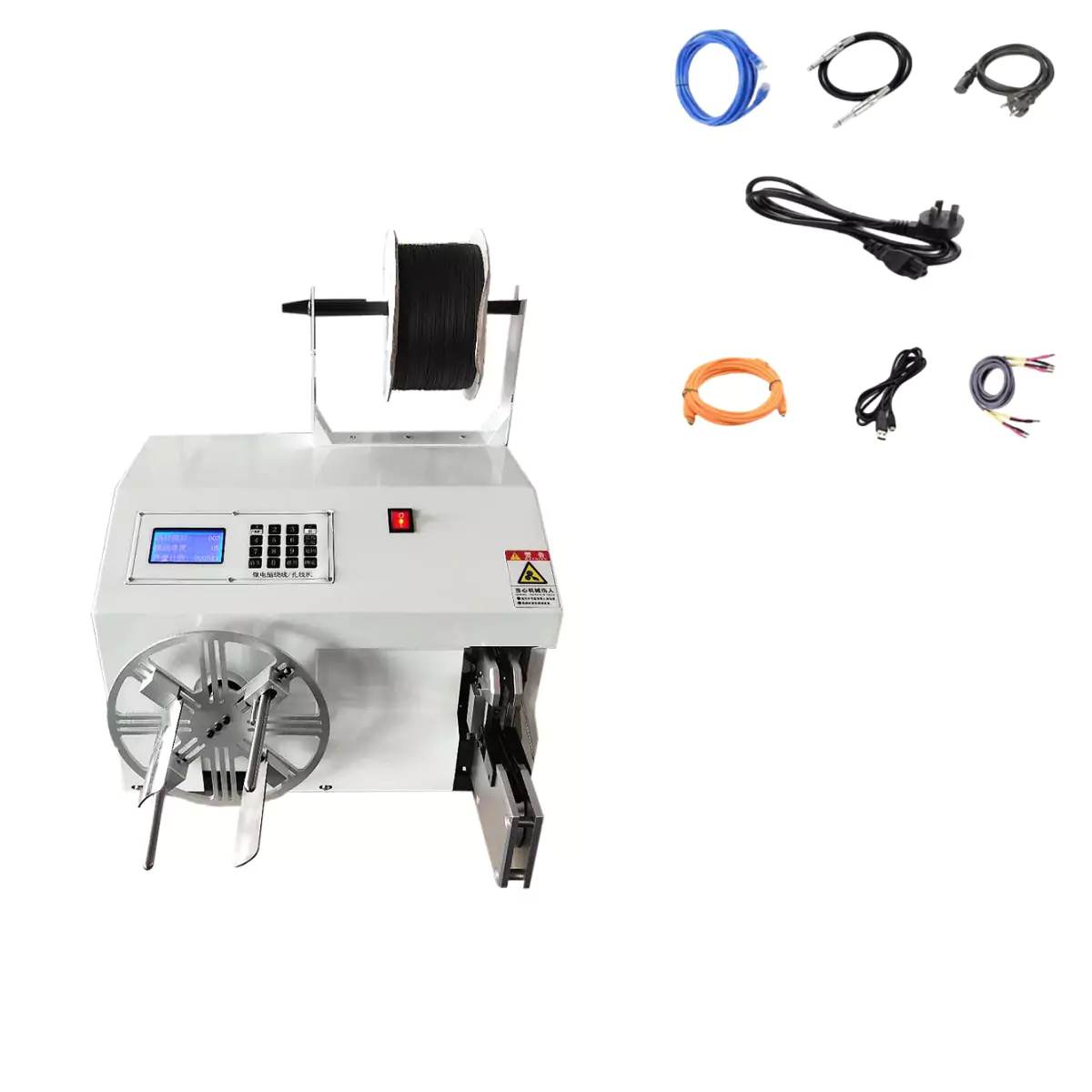
Common Causes of Malfunctions in Wire Coiling Twist Tie Machines
Common reasons for malfunctions in wire coiling twist tie machines primarily include the following:
Insufficient Equipment Precision: The machine frame, guide rails, lead screws, and other components of the coiling machine lack sufficient precision, leading to the wire not maintaining a straight state during the coiling process, thus resulting in uneven coiling.
Unstable Tension Control: Improper tensioner settings or a faulty tension control system cause uneven tension in the wire during coiling, affecting the coiling quality.
Unreasonable Winding Parameter Settings: Incorrect settings for parameters such as wire diameter, number of turns, or coiling speed can lead to issues like uneven coiling, overlapping wires, or skipped turns.
Mold Precision Issues: Insufficient processing precision or severe wear of the mold prevents the wire from accurately embedding into the mold groove, causing wire overlap.
Lubrication and Maintenance Issues: Lack of necessary regular maintenance and lubrication for the equipment leads to problems such as abnormal bearing heating and lubricant leakage.
Abnormal Load: Exceeding the equipment’s designed load range can result in bearing damage.
Improper Operation: Operators who are unfamiliar with the equipment or are negligent may cause issues like skipped turns.
Pneumatic System Faults: Malfunctions such as cylinders not operating or insufficient air pressure can affect the normal operation of the equipment.
Solutions for Malfunctions
To address these fault causes, the following solutions can be adopted:
Improve Equipment Precision: Ensure that the processing and assembly precision of all components meet requirements, and regularly inspect and maintain the equipment.
Optimize Tension Control System: Ensure tension is stable and adjustable, and regularly calibrate tension sensors.
Set Winding Parameters Reasonably: Adjust winding parameters according to actual conditions to ensure optimal winding results.
Regularly Check Mold Precision: Promptly replace severely worn molds to ensure mold precision.
Strengthen Equipment Maintenance: Establish good equipment maintenance guidelines, and regularly check and replenish lubricants.
Control Load Within a Reasonable Range: Avoid exceeding the equipment’s designed load range.
Enhance Operator Training: Ensure operators are proficient in equipment operation to reduce faults caused by improper operation.
Inspect and Maintain Pneumatic System: Ensure a stable air source and promptly repair pneumatic components.
Find expert wire coiling twist tie machine technical resources on our specialized page.