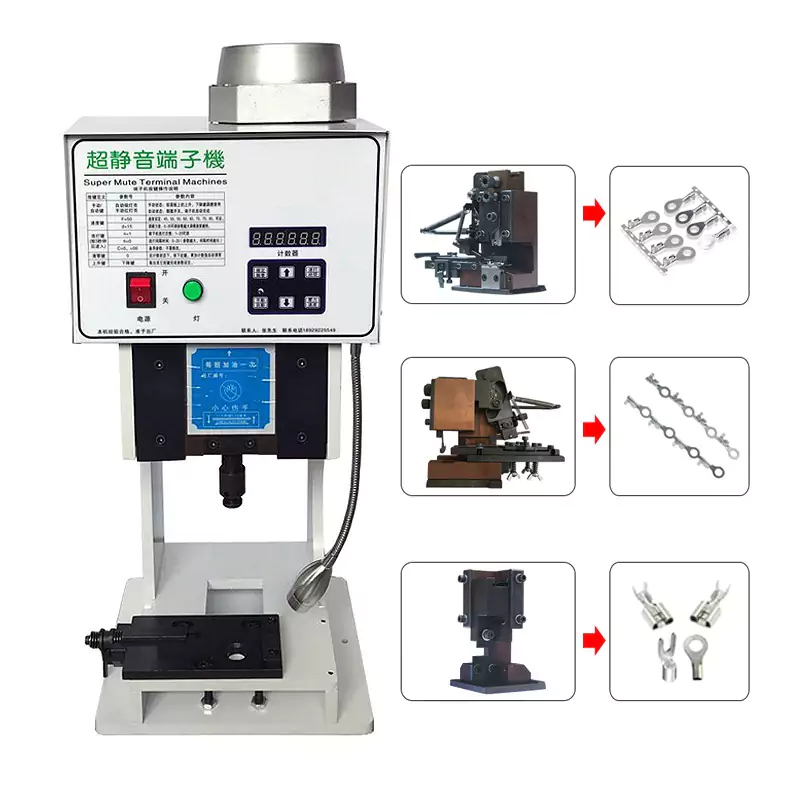
How to Troubleshoot Common Issues with Your Chained Terminal Crimping Machine?
Common Issues and Solutions for Your Chained Terminal Crimping Machine
Is your chained terminal crimping machine giving you a headache? Don’t worry, we’ve got you covered! Let’s dive into some common problems and their easy-to-follow solutions.
Section 1: Inconsistent Stripping Length Issues
Root Cause Analysis
Inconsistent stripping length typically stems from two primary mechanical issues:
Feed Roller Tension Problems
Over-tightened rollers deform wires, causing irregular feeding
Loose rollers allow wire slippage during processing
Blade Depth Configuration
Incorrect depth settings lead to partial stripping
Excessive depth damages conductor strands
Step-by-Step Resolution
A. Feed Roller Adjustment Procedure
Power off and lock out the machine
Locate roller tension adjustment mechanism
Test with sample wire:
Ideal setting allows smooth feeding without deformation
Use feeler gauge for precise gap measurement (typically 0.1mm under wire diameter)
Secure adjustment bolts after optimization
B. Blade Depth Calibration
Access blade positioning system
Perform incremental test cuts (0.05mm adjustments)
Verify:
Complete insulation removal
Undamaged conductor surface
Replace blade if:
Visible nicks or wear
Repeated adjustments fail to resolve
Irregular cutting patterns persist
Pro Tip: Maintain a blade replacement log to track wear patterns
Section 2: Uneven Copper Exposure on Crimped Terminals
Multifaceted Causes
This critical quality issue involves multiple potential failure points:
Misalignment Issues
Guide tube offset
Blade angle deviation
Mechanical Looseness
Auxiliary press block play
Machine distance drift
Systematic Correction Method
Alignment Verification Protocol
Use laser alignment tool for guide tube positioning
Verify 90° blade orientation with precision square
Check manufacturer’s specifications for machine distance
Torque Calibration
Tighten all press block fasteners to specified values
Implement regular torque checks (recommended weekly)
Process Validation
Run sample crimps after each adjustment
Measure exposure consistency with optical comparator
Quality Control Note: Document all adjustments for traceability
Section 3: Machine Start-Up and Cycle Interruption Problems
Diagnostic Flowchart
Comprehensive Solutions
Electrical Verification
Measure input voltage (±10% of rated)
Test emergency stop circuits
Inspect signal connections for corrosion
Pneumatic System Check
Verify 5-7 bar operating pressure
Check for leaks using soap solution
Clean/replace clogged filters
Blockage Removal
Follow machine-specific clearance procedures
Use approved cleaning tools (non-metallic where possible)
Implement magnetic traps for ferrous debris
Safety Reminder: Always depressurize systems before servicing
Section 4: Electronic Wire Cutting Inconsistencies
Precision Cutting Methodology
Optimal Parameter Table
| Wire Gauge (AWG) | Feed Pressure (psi) | Blade Replacement Interval (cycles) |
|---|---|---|
| 28-24 | 15-20 | 50,000 |
| 22-18 | 25-30 | 35,000 |
| 16-12 | 35-40 | 20,000 |
Advanced Troubleshooting Techniques
Feed System Optimization
Implement servo-controlled feed mechanisms
Use optical encoders for length verification
Install anti-vibration mounts
Blade Maintenance Program
Establish sharpness testing protocol
Maintain proper blade storage conditions
Implement edge treatment for extended life
Section 5: Escalation Procedures
When to Seek Technical Support
Problem Patterns
Recurring issues after corrective actions
Multiple simultaneous failures
Safety system activations
Documentation Requirements
Prepare machine error logs
Record all attempted solutions
Note environmental conditions
Technical Support Checklist
Machine model and serial number
Software/firmware versions
Recent maintenance history
Preventive Maintenance Schedule
Recommended Maintenance Intervals
Component Daily Check Weekly Maintenance Monthly Calibration
| Component | Daily Check | Weekly Maintenance | Monthly Calibration |
|---|---|---|---|
| Feed Rollers | Clean | Tension verify | Bearing inspection |
| Cutting Blades | Visual | Sharpness test | Angle verification |
| Guide Systems | Lubricate | Alignment check | Wear measurement |
| Electrical Systems | Connection | Sensor test | Full diagnostic |
By implementing this structured troubleshooting approach, operators can systematically address common wire processing issues while maintaining optimal machine performance. Always prioritize safety protocols and document all maintenance activities for continuous improvement tracking.
Find expert terminal crimping machine technical resources on our specialized page.