Perfect Wire Loom Tubing Cuts: Guide And Solutions
Introduction to Precision Tubing Cutting
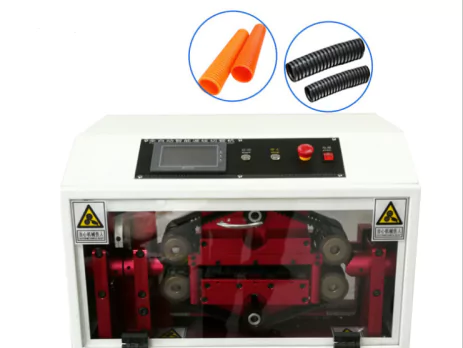
Achieving flawless cuts on wire loom tubing is critical for professional electrical installations and manufacturing efficiency. Automatic non-split wire loom tubing cutters deliver high-speed production, but irregular cuts can disrupt workflow and compromise product quality. This comprehensive guide examines the root causes of cutting defects and provides proven solutions to ensure clean, consistent cuts every time.
Section 1: Diagnosing Irregular Cuts – Common Causes
1. Inferior Tubing Material Quality
Problem:
Uneven wall thickness causes blade deflection, leading to jagged edges.
Contaminants (dust, debris) inside tubing interfere with smooth cutting.
Signs:
Inconsistent cut angles
Rough or frayed edges
2. Worn or Damaged Cutting Blades
Problem:
Dull blades tear instead of shear, creating burrs.
Chipped or misaligned blades cause uneven pressure distribution.
Signs:
Visible nicks on blade edges
Increased force required for cuts
3. Incorrect Machine Settings
Problem:
Excessive cutting depth → Tubing deformation
Insufficient speed → Incomplete cuts
Improper blade pressure → Slippage or crushing
Signs:
Partial cuts requiring manual finishing
Crushed or flared tubing ends
Section 2: Proven Solutions for Flawless Cuts
1. Blade Maintenance & Replacement
✔ Inspect Weekly – Check for dullness, chips, or warping.
✔ Use OEM Blades – Generic blades may not meet tolerances.
✔ Sharpening Protocol – Follow manufacturer guidelines for honing angles.
Pro Tip: Keep spare blades on hand to minimize downtime.
2. Optimizing Cutting Parameters
Parameter Adjustment Guide Ideal For
Cutting Depth Set to 110% of wall thickness Preventing incomplete cuts
Speed Faster for soft tubing, slower for reinforced Clean shearing
Blade Pressure Higher for thick-walled tubing Avoiding slippage
Note: Always test settings on scrap material first.
3. Selecting Premium Tubing
Supplier Checklist:
✅ Certifies uniform wall thickness (±0.1mm tolerance)
✅ Uses high-grade polymers (PP, PE, or PVC)
✅ Provides contamination-free coils
Case Study: A manufacturer reduced defects by 68% after switching to a certified supplier.
Section 3: Machine Performance Optimization
1. Scheduled Maintenance Routine
Daily:
Blow out debris with compressed air.
Wipe blades with isopropyl alcohol.
Monthly:
Lubricate rails and bearings.
Calibrate blade alignment.
2. Operator Training Essentials
Critical Skills:
Identifying early signs of blade wear
Properly loading tubing to avoid twists
Emergency jam clearance procedures
Training Tip: Use video demonstrations for complex adjustments.
Section 4: Advanced Troubleshooting
Problem: Chronic Angled Cuts
Likely Causes:
Misaligned blade holder
Worn guide rollers
Solution:
Relevel the cutting assembly with a laser aligner.
Replace rollers if grooves are visible.
Problem: Intermittent Cutting Failures
Diagnosis Steps:
Check air pressure (if pneumatic).
Inspect sensor calibration.
Test motor consistency with a tachometer.
Conclusion: Keys to Cutting Perfection
Material Matters – Invest in high-quality tubing.
Blade Care is Critical – Monitor wear and use proper replacements.
Precision Settings – Fine-tune depth, speed, and pressure.
Proactive Maintenance – Prevent issues before they arise.
By implementing these strategies, operators can achieve >99% defect-free cuts while extending equipment lifespan. For persistent issues, consult your machine’s technical service manual or contact the manufacturer.
Conclusion:
By understanding the potential causes of irregular cuts and implementing the solutions outlined above, you can effectively troubleshoot cutting issues with your automatic non-split wire loom tubing cutting machine. Regular maintenance, proper tool care, and utilizing high-quality tubing materials are all essential for achieving consistent and clean cuts, maximizing machine performance and production efficiency.