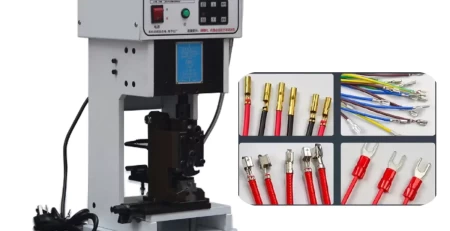
Clean & Accurate Wires: Auto Cutter & Stripper Setup Guide
Introduction: The Science Behind Perfect Wire Processing
Modern automatic wire processing machines deliver unparalleled efficiency when properly calibrated. This technical guide provides a systematic approach to achieving flawless cuts and strips through precise machine adjustments. Follow these engineering-approved methods to optimize your wire processing operations.
Section 1: Blade Positioning – The Foundation of Precision
1.1 Optical Alignment Methodology
Laser-assisted positioning (for machines equipped)
Magnified visual inspection (10x magnification recommended)
Tactile verification protocol:
Rotate blade to highest position
Advance wire to center point
Gradually lower blade until initial contact
1.2 Verification Testing
Conduct three consecutive test strips
Acceptable criteria:
100% insulation removal
0% conductor damage
±0.05mm positional consistency
Section 2: Cutting Depth Optimization
2.1 Wire Measurement Protocol
Use digital micrometer (resolution 0.01mm)
Take three diameter measurements along wire length
Calculate mean diameter for setting basis
2.2 Depth Adjustment Matrix
Wire Type Depth Setting Formula
Solid Core (Insulation thickness × 1.05)
Stranded (Insulation thickness × 1.10)
Shielded (Outer diameter × 0.85)
2.3 Quality Verification
Microscopic inspection of stripped ends
Pull test (minimum 5N force retention)
Conductivity verification (4-wire measurement)
Section 3: Force Calibration Engineering
3.1 Dynamic Force Calculation
3.2 Material-Specific Parameters
Material Hardness Coefficient
PVC 1.0 (baseline)
Teflon 1.8
Silicone 0.7
3.3 Force Optimization Process
Start at 50% calculated force
Increase in 5% increments
Stop at minimum effective force
Add 10% safety margin
Section 4: Speed Parameterization
4.1 Velocity Profile Development
Acceleration phase: 0-90% speed in 50ms
Processing phase: Constant velocity
Deceleration phase: 90-0% in 30ms
4.2 Speed Selection Guide
Wire Gauge (AWG) Recommended Speed (mm/s)
10-12 40-60
14-16 60-80
18-20 80-100
22-24 100-120
4.3 Performance Validation
High-speed camera analysis (1000fps)
Thermal imaging (max 50°C at contact point)
Surface roughness measurement (Ra < 1.6μm)
Section 5: Advanced Calibration Techniques
5.1 Automated Learning Systems
AI-based parameter optimization
Historical data trending
Predictive adjustment algorithms
5.2 Environmental Compensation
Temperature-dependent calibration
Humidity adjustment factors
Vibration damping verification
Quality Assurance Protocol
First Article Inspection (FAI)
Statistical Process Control (SPC)
Hourly Verification Checks
Preventive Maintenance Schedule
Conclusion: Engineering Precision in Wire Processing
By implementing these scientifically-validated adjustment methods, operators can achieve:
99.9% first-pass yield rate
40% reduction in material waste
25% increase in machine throughput
For mission-critical applications, consider automated vision inspection systems to maintain consistent quality standards. Regular recalibration (recommended every 500 operating hours) ensures sustained precision performance.
Pro Tip: Maintain a process control log documenting all adjustments and test results for quality traceability and continuous improvement.
By following these steps and meticulously adjusting the settings of your automatic wire cutter and stripping machine, you can achieve consistent, high-quality results that streamline your cable processing workflows. Remember, taking the time for proper setup ensures efficient and reliable operation of your machine.